

Water Damage Drying · Berlin & Surrounding Area
Building drying in Berlin following water damage – measured, not estimated
After a burst pipe, the visible water is quickly wiped away. However, the moisture that has penetrated the screed, insulation layer, and masonry remains—leading to mold, unpleasant odors, and secondary damage if not addressed through professional technical drying. We measure the extent of the moisture, carry out drying using the appropriate equipment, and verify the results with follow-up measurements.
- Drying of screed, insulation layers, cavities, and rooms
- Measurement log at the beginning, during, and at the end
- Coordination with insurance and property management
Available around the clock · Appointments throughout Berlin and the surrounding area
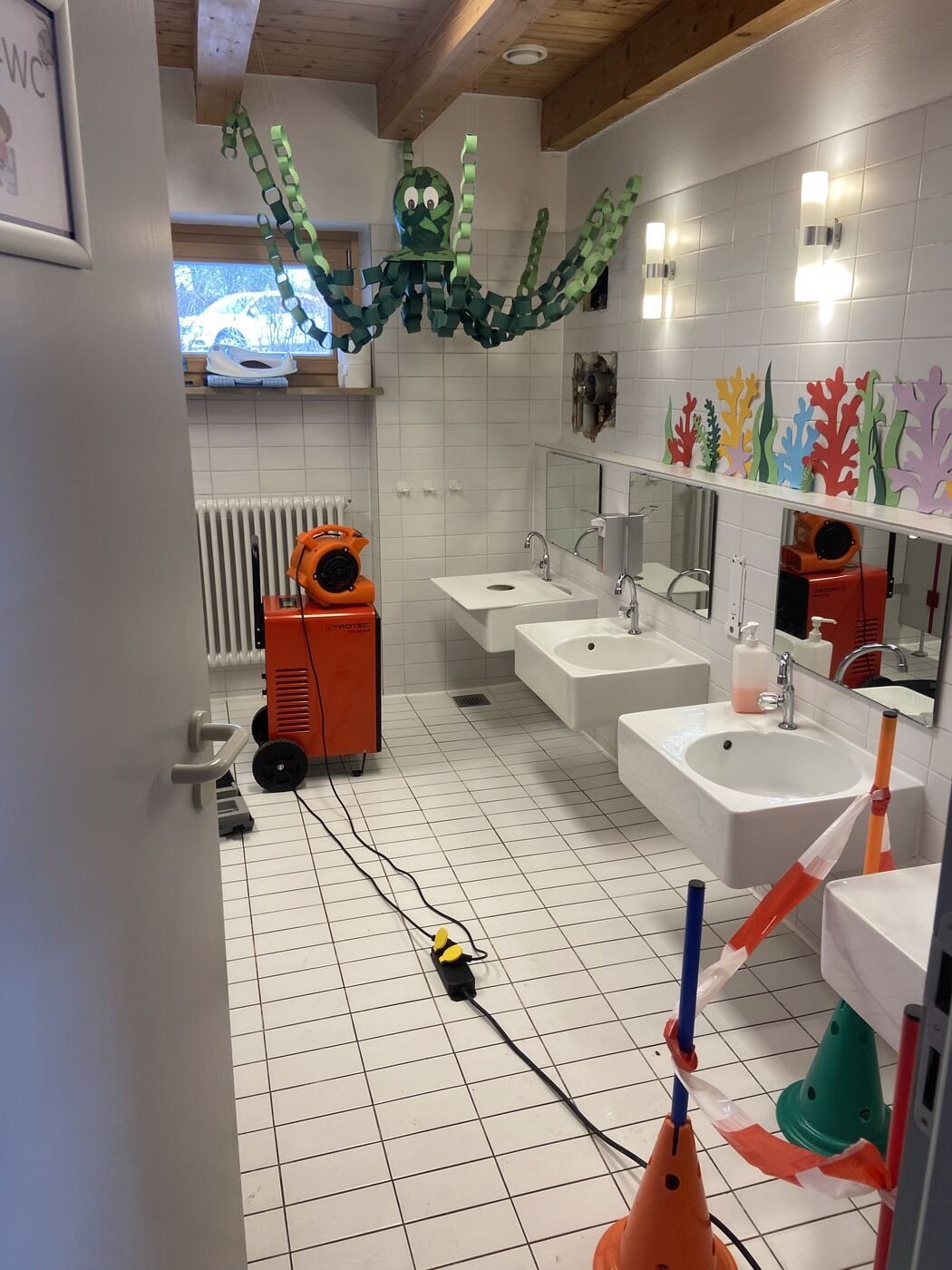
Why use technical drying?
Ventilation is almost never enough after water damage
Water that has seeped beneath the flooring collects in the insulation layer under the screed. No air reaches this space—opening windows and turning on the heating will do nothing to change that, even after weeks. Many tenants and property owners in Berlin are familiar with the consequences: swollen parquet flooring, a musty odor, and mold behind the baseboards.
As a drying specialist company in Berlin, we handle the entire process of water damage remediation: extracting water, locating the source, drying building components, and documenting the results—for historic buildings, prefabricated structures, new builds, and commercial properties.
Technical drying removes moisture from a building component in a targeted manner: depending on the structure, we either extract damp air from the insulation layer or pump in dry air, place condensation or adsorption dehumidifiers in the room, and monitor progress through regular measurements. This ensures that you—as well as your insurance company—know exactly when the floor is truly ready to be covered again.

Proceedings
Which drying method for which type of damage?
| Proceedings | Mission |
|---|---|
| Insulation layer drying | Water beneath the screed – the most common scenario following pipe damage in bathrooms and kitchens |
| Screed drying | Damp-affected cement or anhydrite screed, including prior to the installation of new floor coverings |
| Cavity drying | Lining walls, drywall construction, service shafts, and timber-joist ceilings in older buildings |
| Room and wall drying | Damp walls, basement areas, moisture in new buildings |
| Infrared heating panels | Targeted drying of individual wall surfaces, e.g., behind kitchen units |
The time required for drying depends on the material, the thickness of the layer, and the initial moisture content. Drying an insulation layer typically takes two to four weeks. We carry out regular measurements and only remove the equipment once the values are within the standard range.
Electricity and noise levels: Drying equipment runs around the clock. We document power consumption using sub-meters; in the case of insured losses, these costs are generally reimbursed.
Berlin
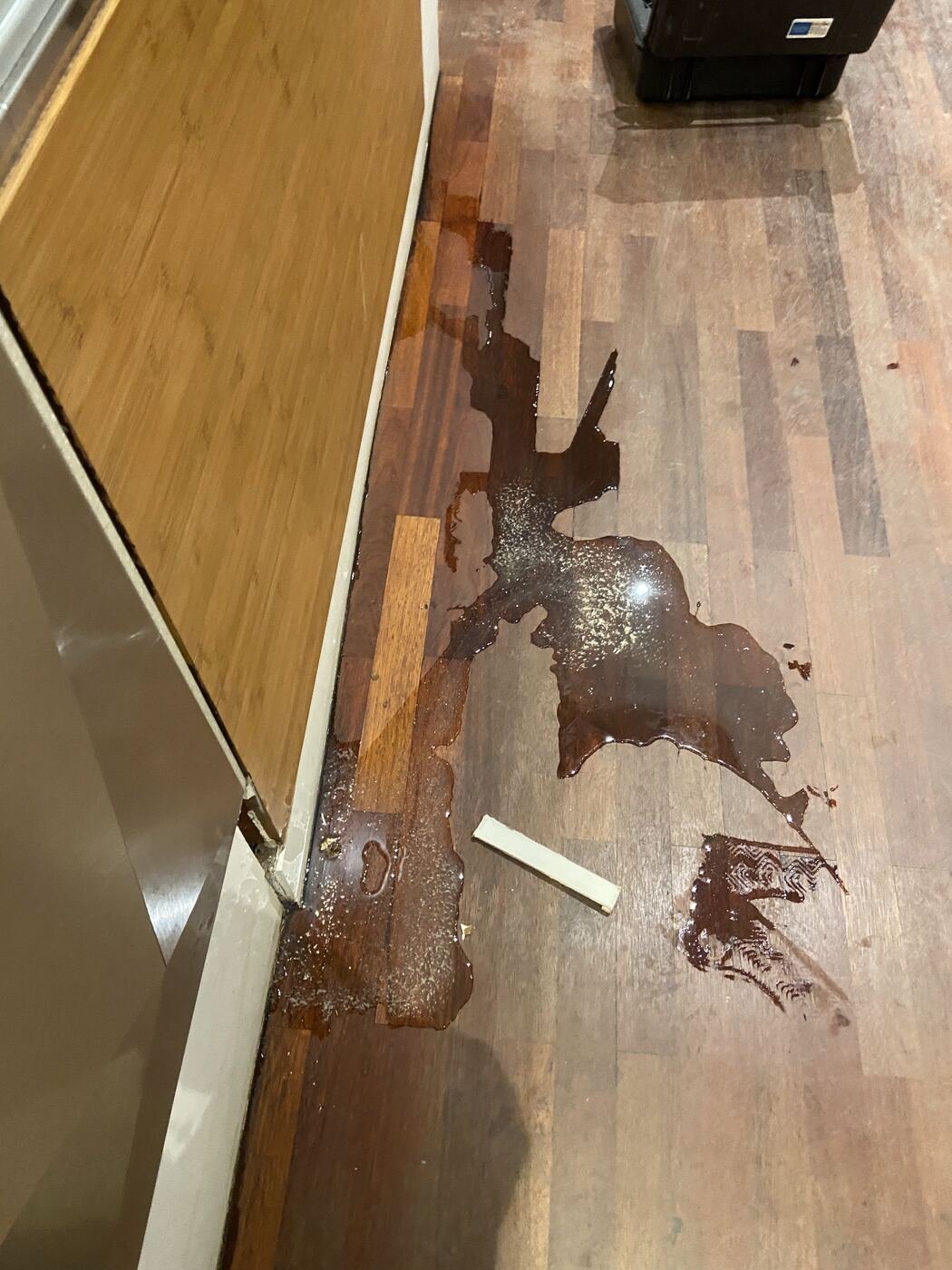
Drying in a Berlin period building: timber-joist ceiling and loose-fill insulation
In older buildings with timber-joist ceilings, prompt action is essential: the clay or sand fill between the joists absorbs water and releases it only very slowly. If it remains wet for too long, there is a risk of rot at the joist ends, as well as mold growth. For this reason, we inspect not only the affected apartment but also the ceiling below it; if necessary, we create small access openings to allow for targeted ventilation of the fill material.
In apartment buildings, we coordinate device locations, access, and power connections with tenants and property management. You will be assigned a dedicated contact person and provided with a measurement schedule, ensuring everyone knows when we will arrive.
Sequence
Procedure in Berlin
Damage assessment
Has the root cause been stopped? We measure moisture levels in floors, walls, and ceilings and determine the drying strategy.
Setting up devices
Condensation dryers, side-channel blowers, water separators, or heating plates – tailored to the specific component.
Control measurements
Regular measurements show progress; we adjust the technique as needed.
Conclusion & Minutes
Final measurement, equipment removal, meter reading, and documentation for insurance purposes and tradespeople.
Is water leaking out right now?
Close the main water tap or shut-off valve, switch off the electricity in the affected rooms (only from a dry location), take photographs of the damage – and then give us a call. We will advise you over the phone on the best steps to take until we arrive.
Area of application
Building drying services throughout Berlin and the surrounding area
We offer building drying services across all twelve districts of Berlin; from our base in Westend, we can reach any location quickly via the A100, A111, and Heerstraße—the same applies to the neighboring municipalities in Brandenburg.
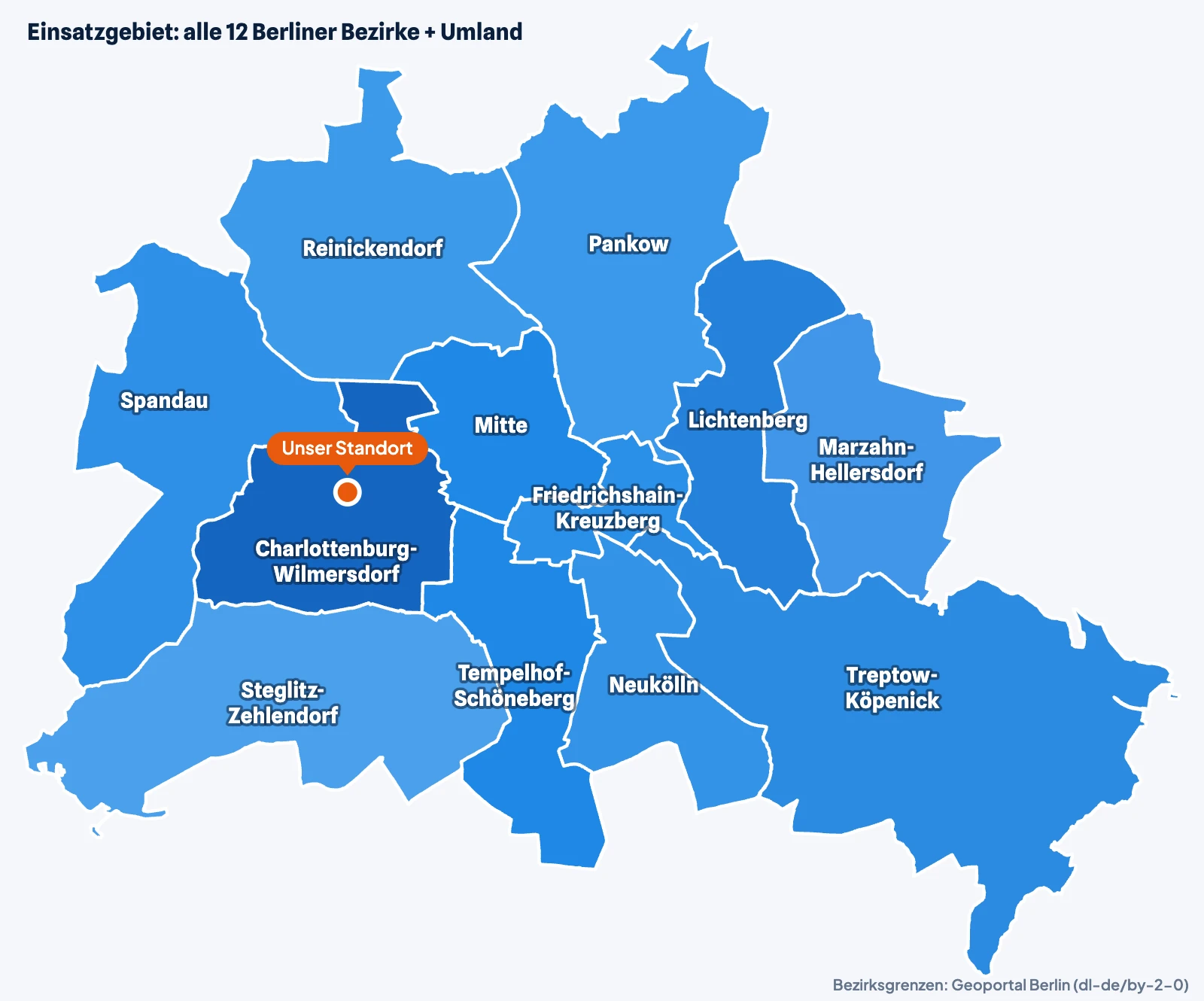
Berlin Districts
- Charlottenburg-Wilmersdorf
- Spandau
- Steglitz-Zehlendorf
- Tempelhof-Schöneberg
- Mitte
- Friedrichshain-Kreuzberg
- Pankow
- Reinickendorf
- Neukölln
- Treptow-Köpenick
- Lichtenberg
- Marzahn-Hellersdorf
Surrounding area (Brandenburg)
- Potsdam
- Falkensee
- Kleinmachnow & Teltow
- Stahnsdorf
- Dallgow-Döberitz
- Hennigsdorf
- Oranienburg
- Bernau bei Berlin
- Hoppegarten
- Schönefeld
- Königs Wusterhausen
- Ludwigsfelde
Do you live a bit further out? Just give us a call – often, an appointment can still be arranged.
FAQ
Questions about building drying in Berlin
How long does structural drying take?
Drying an insulation layer typically takes two to four weeks, while drying a room alone often takes less time. Thick screed, loose-fill insulation in older buildings, or very high initial moisture levels will extend the process. What matters is the measurement, not the calendar.
Can I stay in the apartment during the drying process?
In most cases, yes. The units are audible—somewhere between the sound of a refrigerator and a vacuum cleaner on a low setting—so we position them in such a way that sleeping areas remain unaffected.
Who pays for the drying?
In the event of an insured loss caused by tap water, the residential building insurance policy generally provides coverage, including the cost of electricity. We document measurement readings and meter figures for billing purposes.
Does the floor need to be torn out?
Often, no. Many types of screed can be dried using insulation-layer drying techniques without the need for removal. Whether this is feasible depends on the floor covering, the type of screed, and how long it has been damp—we assess this on-site.
Do you also dry new buildings?
Yes. For new construction and renovation projects, we accelerate the drying process for screed and plaster, ensuring that flooring installers and painters can begin work on schedule.